
While a standard robotic mower is perfect for a flat, suburban rectangle, many yards feature steep hills, slippery slopes, and rough terrain (like exposed tree roots and ruts or holes). This category is dedicated to the heavy-duty machines designed to handle the landscapes where others get stuck.
What is an AWD Robotic Mower?
Just like an SUV, an AWD robotic mower delivers power to all wheels simultaneously. Most standard robot mowers are Rear-Wheel Drive (RWD), which can lose traction on an incline as the weight shifts, or Front-Wheel Drive (FWD), which can struggle to "pull" the unit up a hill.
AWD models use independent motors or a sophisticated drivetrain to ensure that even if two wheels lose grip in a damp patch or a dip, the other two keep the mower moving.
The primary reason to choose an AWD model is grade capability.
- Standard Mowers: Typically handle slopes up to 20° (approx. 35% grade).
- AWD Mowers: Can often conquer inclines of 38° to 45° (80% to 100% grade).
If your backyard looks more like a ski slope than a soccer pitch, AWD isn't just a luxury—it’s a requirement to prevent the mower from sliding or triggering "trapped" alerts.
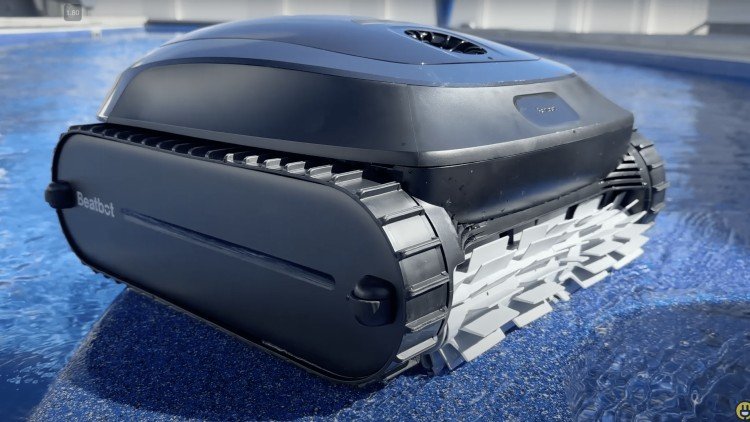
Algae and grime don't stay confined to the pool floor. Walls collect just as much buildup, especially in shadier corners or spots with less water circulation, and a cleaner that only ever scrubs the bottom leaves that half of the job to you. Wall-climbing models solve this by using the same motor and impeller that drives their suction to create enough negative pressure to grip a vertical surface, essentially climbing the wall the same way they'd cross the floor.
It's worth being precise about what "wall climbing" actually promises, since it gets confused with a related but different feature. Wall climbing generally means the cleaner can reach the mid and lower sections of the wall. It doesn't necessarily mean it scrubs the waterline itself, that thin band right at the surface where the pool accumulates the most stubborn scum. Getting all the way up to that line and cleaning it horizontally is a separate, more advanced capability, and a cleaner can legitimately climb walls well without ever touching it.
Budget, floor-only cleaners skip this feature entirely, which keeps costs down but shifts wall maintenance back onto a hand brush and pool chemicals working overtime to compensate. For anyone tired of scrubbing walls manually, or running a pool with a lot of shaded or low-circulation area, wall climbing turns that from a weekly chore into something the robot just handles on its own.
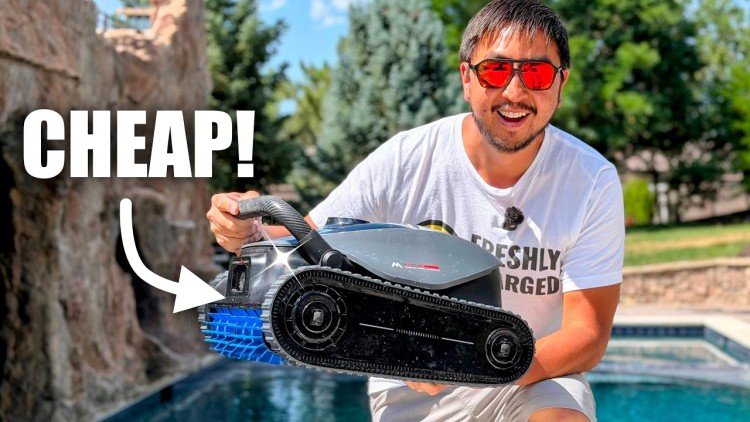
A pool can look perfectly clear and still have the dirtiest part of the whole thing sitting in plain sight. That thin ring right at the waterline is where sunscreen, body oils, lotion, and dead skin all end up, not because anyone's pool is unusually dirty, but because those substances float, and surface tension drags them sideways until they hit the tile and stick. Evaporation makes it worse over time, concentrating that residue into the sticky film most pool owners know as a scum line.
It's more than a cosmetic nuisance, too. Left alone, that buildup becomes a place for bacteria to take hold, shielded from the sanitizing chemicals working everywhere else in the pool. This is the specific job waterline cleaning is built for, going up to that surface line and scrubbing it horizontally rather than just brushing past on the way up a wall. That's a meaningfully different task than general wall climbing, and worth checking for separately, since a cleaner can handle walls well without ever actually reaching or scrubbing the line itself.
However, not everything that looks like scum actually is. A greasy, sticky film is scum, and this is exactly what a waterline-cleaning robot is designed to handle. A rough, chalky white deposit is usually calcium scale instead, a mineral buildup tied to water chemistry rather than organic residue, and no robot brush is going to fix that on its own.
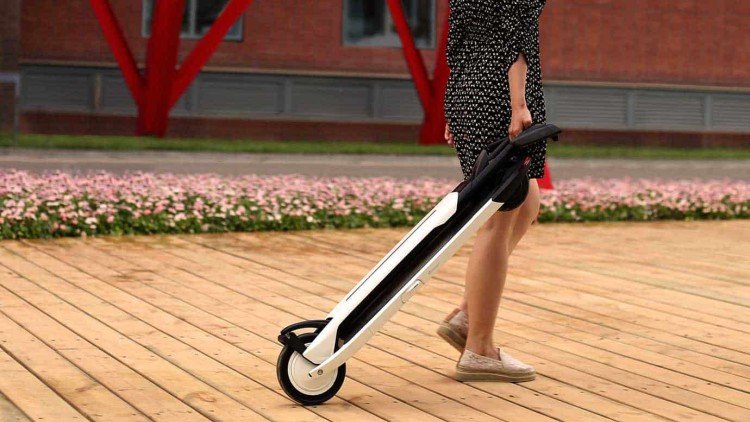
Not every commute is door to door. Plenty of riders carry their scooter up a flight of stairs, onto a bus or train, or through a lobby before they ever get to ride it, and that's a completely different demand than the scooter itself performing well once you're moving. Our Lightweight category is built around exactly that: scooters light enough that carrying them isn't the hard part of your day.
The line we drew is under 30 lbs, and it's not arbitrary. That's the weight buying guides consistently point to as comfortable to lift one-handed, whether that's up a stairwell, onto a train, or into a car trunk. It also happens to be where the market's genuinely lightest scooters cluster, several well-regarded models land in the 26 to 29 lb range. For contrast, popular commuter scooters that aren't built around portability often run 40 lbs or more, which is a real difference when you're the one carrying it rather than riding it.
A quick note on tradeoffs: lighter usually means a smaller battery and a lighter-duty frame, since weight has to come from somewhere. That's a completely reasonable trade if your priority is a scooter you can actually lift without dreading it, but it's worth knowing you're likely giving up some range and top-end power compared to a heavier commuter model. If range matters just as much as portability to you, look for a lightweight pick with a removable battery, it's one of the few ways to keep the scooter itself light while still carrying extra range separately.
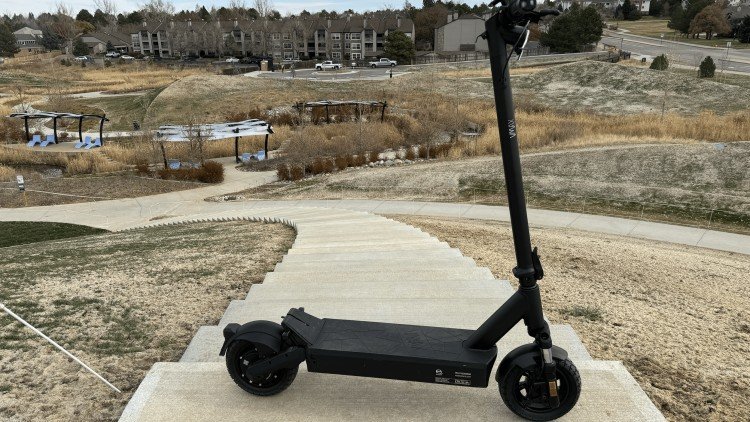
Top speed gets more attention than almost any other spec in this industry, and for a new rider, it's honestly the wrong thing to obsess over. What actually determines whether your first weeks on a scooter go smoothly is braking quality, how stable the ride feels at low speed, and whether the thing is built well enough to trust. None of that shows up as a single clean number you can filter by. Top speed does, and it also happens to be the spec that most closely tracks how much a mistake is going to cost you while you're still learning. That's why we built this category around it: not because a faster scooter is a worse scooter, but because a 30+ mph scooter demands reflexes and judgment that take time to build, and that's not a fair ask on day one.
Our Beginner-Friendly category caps out at a top speed of 25 mph. That ceiling isn't arbitrary. It's the range buying guides consistently point to for first-time riders, fast enough to feel useful in commuting and to keep pace with city traffic and bike lanes, slow enough that a wobble or a bad reaction at speed doesn't turn into a real injury. Scooters above 30 mph are a different category entirely, closer to motorcycle territory in the reflexes they demand, regardless of how any given listing chooses to market them.
One thing worth knowing as you shop within this range: most new riders don't actually ride at their scooter's top speed for the first several months anyway, so buying at the low end of this bracket rarely feels limiting in practice. What matters more day to day is a scooter with dependable brakes and a stable, predictable feel, and if a listing calls those out explicitly, that's worth more than an extra 5 mph on the spec sheet.
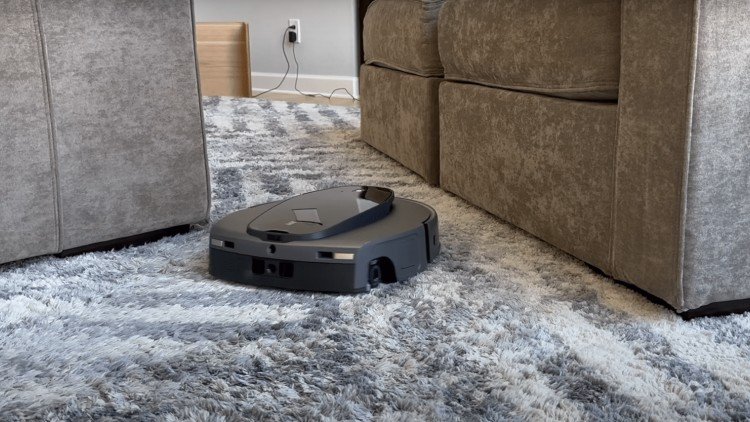
As home automation moves toward greater precision, Light Detection and Ranging (LiDAR) has become the gold standard for high-end floor care.
What is LiDAR Navigation?
LiDAR works by emitting thousands of invisible laser pulses per second from a rotating sensor—often housed in a small "turret" or puck on top of the vacuum. By measuring how long it takes for these pulses to bounce off walls and furniture, the robot creates a high-definition, millimeter-accurate 360° map of your home.
Why It Matters
- True Systematic Cleaning: Unlike "bump and turn" models, LiDAR vacuums know exactly where they are. They clean in efficient, straight-line paths, ensuring every inch of floor is covered without redundant passes.
- Total Darkness Operation: Because LiDAR uses its own light source (lasers), these vacuums can navigate perfectly in pitch-black rooms—something camera-based models struggle to do.
- Instant Mapping: Most LiDAR robots can map an entire floor of your home in minutes, often before they even begin their first cleaning cycle.
-medium.jpg)
Coverage claims matter significantly more once a lawn crosses the one-acre mark. A mower built for a small suburban lot might finish in a single charge cycle; on a full acre or more, that same class of machine could need several recharge stops just to complete one pass, stretching a single mow across days instead of hours. This is the tier where battery capacity, cutting width, and multi-zone mapping stop being nice-to-haves and start being the whole point.
Real-world coverage tends to run a bit behind the spec sheet, too. Slopes, dense trees, narrow passages, and fast grass growth all eat into a mower's effective range, so a machine rated for exactly your yard size may end up straining to keep up. It's worth sizing up rather than cutting it close, since a bit of extra headroom above your actual acreage keeps the mower from overworking itself trying to finish every session.
Models in this range, like Mammotion's YUKA 3000 or Husqvarna's 420iQ, are built specifically around the one-acre-plus segment, with the navigation and battery life to match. For properties pushing well past that, closer to three or more acres, it's worth stepping up further into genuinely commercial-grade equipment rather than stretching a residential model past its comfort zone.
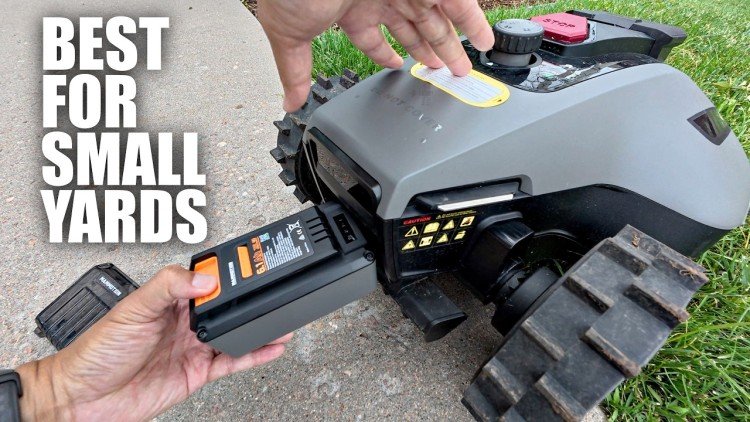
A tenth-of-an-acre postage-stamp lawn doesn't need the same robot as a sprawling half-acre yard, and the market has sorted itself accordingly. Quarter acre, about 10,890 square feet, has become the de facto ceiling for the smallest, most affordable robotic mowers, the tier where compact units built for tight, simple layouts live before specs jump up to handle bigger, more complex terrain.
These smaller mowers trade some things away for their lower price and easier setup. Battery capacity tends to be modest, cutting width narrower, and navigation is often a simpler wire-guided or basic vision system rather than the RTK or LiDAR precision found on pricier machines built for sprawling or obstacle-heavy properties. For a genuinely small, straightforward yard that's rarely a real downside. But a compact quarter-acre mower squeezed onto a lawn full of garden beds, a patio, and tight side passages will struggle more than its spec sheet suggests, since navigation quality can matter as much as raw coverage capacity on a tricky small lot.
If your yard is simple and under a quarter acre, this category is built around exactly that segment: mowers sized, priced, and equipped for compact, uncomplicated lawns.
-medium.jpg)
Most electric dirt bikes are built for dirt, full stop. Straight from the factory, they're missing the basic equipment that public roads require: a DOT-rated headlight and taillight, working turn signals, mirrors, a horn, and tires rated for pavement rather than loose terrain. This category is for the exceptions, bikes that come equipped to actually be registered and ridden legally on the street, not just modified after the fact.
Street legal here means the bike ships with (or is factory-configured for) the hardware a DMV will look for: functioning lights front and back, mirrors, a horn, road-rated tires, and typically a VIN so the bike can be titled in the first place. That's the baseline nearly every state expects before it will hand over a plate.
Be aware that this flag doesn't mean the bike is automatically road-legal in your driveway. Registration rules, license or endorsement requirements, insurance, and even whether "street legal" is recognized at all still varies heavily by state, county, and sometimes city. A bike that rolls straight onto the road in Texas might need extra paperwork in New York or California. Treat this category as a shortlist of bikes built with the right equipment to make that process possible, not a guarantee that you can skip the DMV.
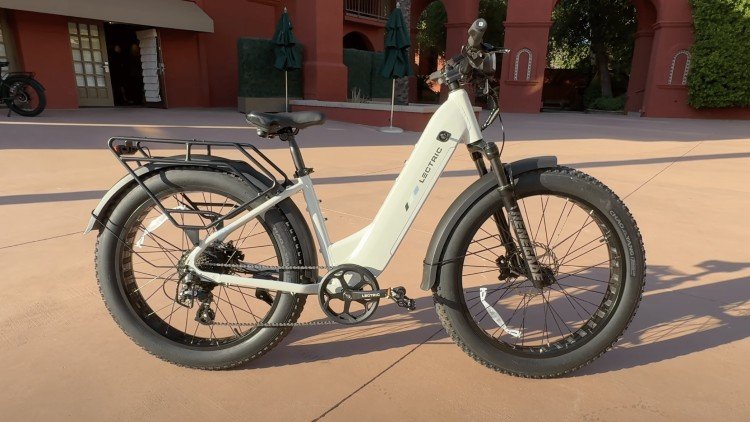
There are certain brands and products that focus on being a good fit for the golden year rider, and this is a list of the bikes we've reviewed that we think would be a good fit for those folks! Here's how we decided what gets on here: First, it needs to be step-thru (or at least have a version of it that is). Second, these bikes tend to be user-friendly and have smooth torque curves (you don't want to feel like the bike is just taking off on you and you're not in control). Third, they tend to be a little more on the lightweight side, but this is not always the case, and won't limit some of the "big bikes" from showing up on this list (the fatter tires tend to be more stable, and we find our seniors love the added stability).
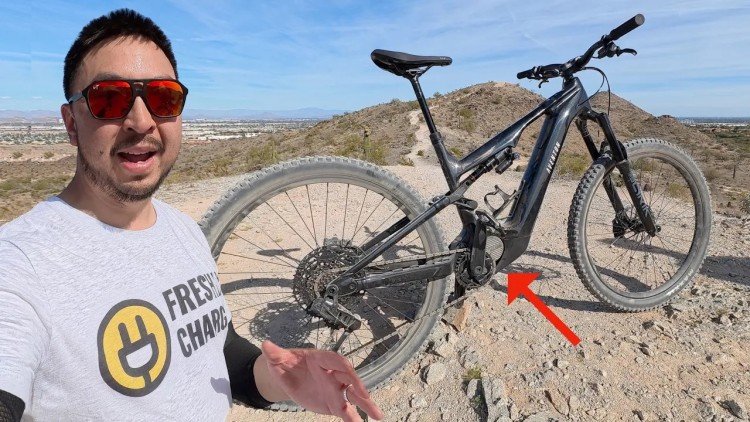
Bike sizing skews shorter than most tall riders realize. The global e-bike market is built predominantly around frames for riders up to about 5'10", which leaves a real, well-documented gap for anyone taller, especially riders in the 6'1" to 6'7" range who consistently report the same problem: a frame that looks big enough on paper but rides cramped in practice.
Standover height is the clearest way to spot the difference before you ever throw a leg over the bike. It's the clearance between the top tube and your inseam when you're standing flat over the frame, and for a rider in the 6'2" to 6'5" range, that number typically needs to land somewhere around 27 to 31 inches to leave safe, comfortable clearance. Below that range, a bike simply wasn't built with a taller rider's proportions in mind, no matter how tall the marketing copy claims it fits.
It's worth repeating a note from the dirt bike side of this list, because it applies here too: standover height is a safety check, not the whole fit picture. A frame can clear the standover bar and still feel wrong if the reach to the handlebars is short or the seatpost can't extend far enough for full leg extension. Cockpit measurements, stack, reach, and available seatpost travel, matter just as much once you're actually riding rather than straddling the bike at a stop. Treat this category as a solid first filter, then confirm the rest of the geometry before buying.
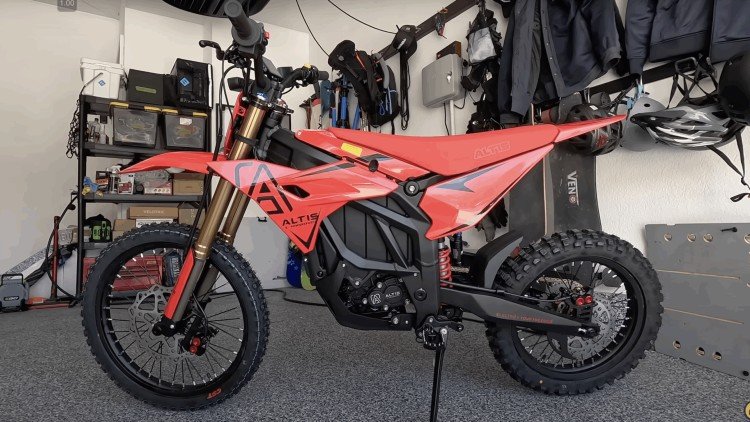
Most electric dirt bikes on the market are tuned around a rider in the 180 to 220 lb range, and it shows up in the spec sheet before it shows up on the trail. Mainstream models like the Sur-Ron Light Bee X and Talaria Sting typically publish official max load ratings somewhere in the low-to-mid 200s. Load one of those bikes past its rating and the effects compound fast: suspension sits deeper in its travel, acceleration softens, range drops, and the frame is working harder than it was designed to.
This category is for the bikes built to handle more. A smaller set of manufacturers design specifically around a bigger payload, reinforcing the frame, running a stronger swingarm and suspension, and pairing it with a motor sized to still deliver real performance at higher weight. Talaria's Komodo, for example, publishes a 353 lb payload rating, well clear of what a standard trail bike is rated for.
Size and price are usually the first places the tradeoff begins to show. Heavy-duty electric dirt bikes tend to run bigger batteries and beefier components to support the added capacity, which means more weight to muscle around at a standstill and typically a higher price tag than the entry-level trail bikes built for lighter riders. For anyone north of 250 lbs, though, it's the difference between a bike that's rated for you and one that's just tolerating you.